You've tried the tea.
Here's a different approach to sleep.
Most sleep advice tells you what to consume. The Art of Falling Asleep introduces selected techniques from cognitive behavioural therapy for insomnia (CBT-I), bringing practical exercises into a gentle seven-night workbook you can start tonight.
Paired with The Art of Unwinding, an evening ritual guide to help you create calmer transitions into bedtime.
Two practical digital books. One payment of ₦6,900.
2 digital books (PDF) · One-time payment · No subscription · Read on your phone, tablet or computer
2 digital books (PDF)
One-time payment
No subscription
Read on phone, tablet or computer
Most sleep advice gives you something to consume.
Chamomile. Lavender spray. Magnesium. Melatonin. A "sleep" playlist.
Some of it makes an evening nicer. Very little of it touches what often keeps people awake at 1 a.m.: the replaying, the clock-watching, the effort to fall asleep, and the hours spent in bed wide awake and increasingly frustrated.
Those patterns tend to feed themselves. The harder you try to force sleep, the further away it feels. The more time you spend awake in bed, the more your bed starts to feel like a place for worrying.
Sound familiar?
- You're exhausted, but your mind starts up the moment the lights go off
- You replay conversations and run through tomorrow's to-do list
- You check the time, work out how many hours you have left, and feel the frustration build
- You've tried the usual remedies and you're still doing the same maths at 2 a.m.
If so, the missing piece may not be another product. It may be a different approach.
There's an approach most people have never heard of.
Meet CBT-I.
CBT-I stands for cognitive behavioural therapy for insomnia. It is a structured, drug-free approach that works on the thoughts and habits that keep sleep difficulties going, rather than only on the symptoms.
Callout: In 2016, the American College of Physicians published a guideline recommending cognitive behavioural therapy for insomnia as the first-line treatment for adults with chronic insomnia. Medication is considered if CBT-I alone doesn't work. [Source: American College of Physicians, Annals of Internal Medicine, 2016]
CBT-I is not one trick. It is a toolkit, and it typically includes:
- Stimulus control: retraining the link between your bed and sleep
- Sleep restriction: a temporary, structured limit on time in bed, typically guided by a trained professional
- Cognitive techniques: examining unhelpful thoughts about sleep
- Relaxation techniques: easing the tension that keeps the body alert
- Sleep habits education: the evening and bedroom habits that support rest
It is usually delivered by a trained professional, but it can also be delivered through web-based modules or self-help books. Yet it rarely shows up in sleep advice, which tends to stop at tea and lavender.
Most sleep advice gives you something to consume.
CBT-I gives you something to practise.
A gentle way to start: The Art of Falling Asleep
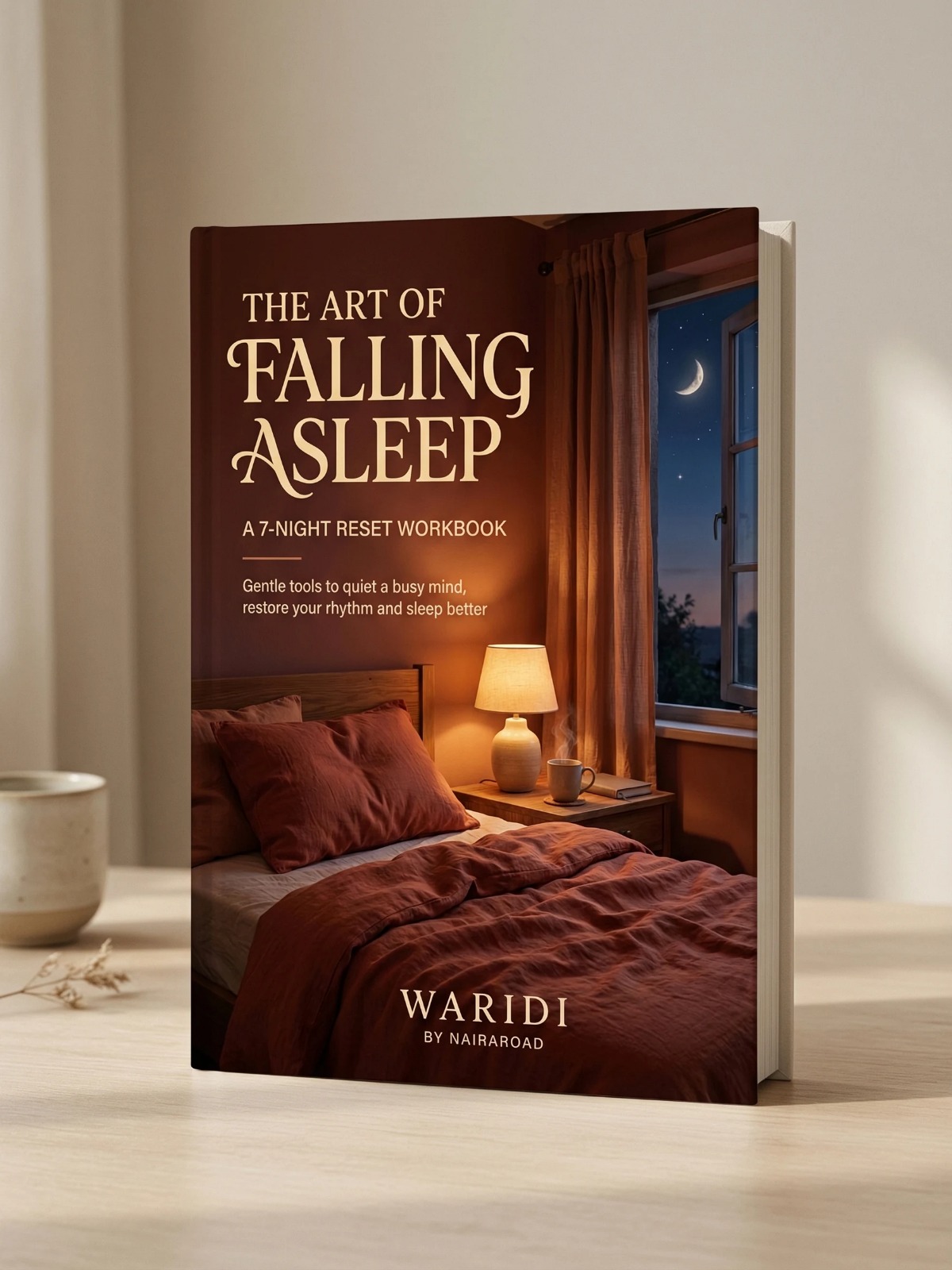
Selected CBT-I techniques, in plain language, over seven nights.
We built this workbook around techniques drawn from the CBT-I toolkit and turned them into short, practical exercises you can do tonight. No jargon. No complicated schedules. No supplements to buy.
Each tool, and the idea behind it
- The Bed Reset. Technique: stimulus control. When you're awake and frustrated, you change your setting instead of fighting the bed, so your bed stops being a place of struggle.
- The Worry Swap. Technique: a cognitive approach. Three questions that create distance from a looping thought, without forcing yourself to think positively.
- The Two-Minute Body Reset. Technique: relaxation. Gently tense and release your hands, shoulders, face and legs to ease the tension that keeps you alert.
- The Brain Dump. Technique: getting worries out before bed. Five minutes to move tasks, worries and unfinished business out of your head and onto paper.
- The Night-Waking Reset. Putting it together. A calm five-step response for when you wake in the night and can't drift off again.
- The Seven-Night Check-In. Technique: tracking. A simple way to notice patterns across the week and see what actually helps. It's not a scorecard.
You can start tonight.
The workbook opens with a page called Tonight, start here. You don't need to fix your whole routine. Begin with three things:
- Get it out of your head. Write down everything on your mind. Don't organise it or solve it. Just get it out.
- Stop fighting the bed. If you're awake and getting frustrated, don't force sleep. Get up if it's safe to, do something quiet in low light, and come back when you feel sleepy.
- Stop checking the time. Turn the clock away or put your phone out of reach. Knowing exactly how long you've been awake rarely helps.
That's enough for tonight.
Then make your evenings work with it.
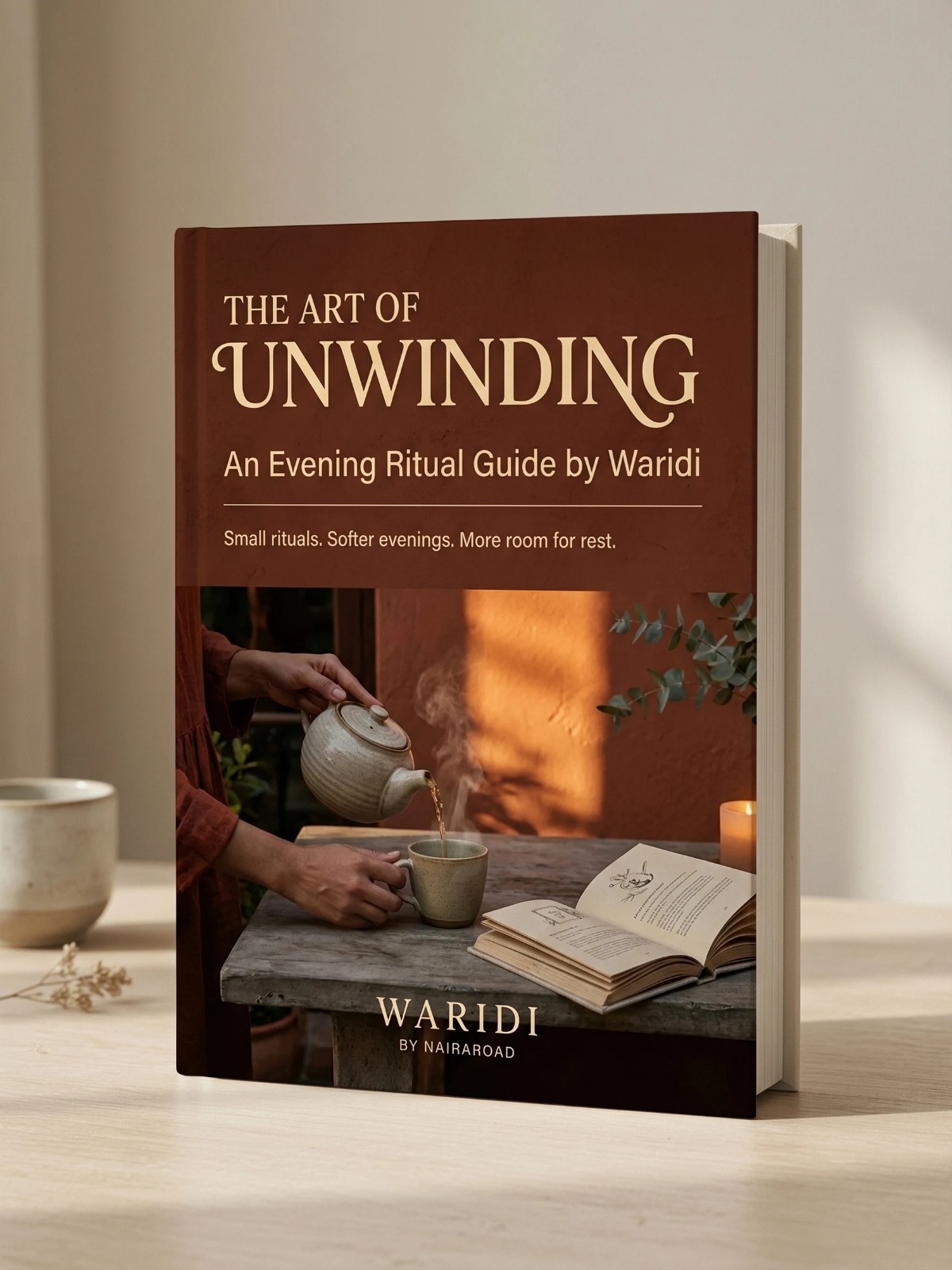
Working on your sleep doesn't begin and end in bed. The way you transition out of your day matters, too.
That's where The Art of Unwinding comes in.
This practical evening ritual guide explores how to close the day, reduce stimulation and create an environment that makes it easier to settle into rest.
From bathing and gentle stretching to digital boundaries, evening drinks and personalised 15-, 30- and 60-minute rituals, it gives you practical ideas you can adapt to your own evenings.
- Close the day on purpose. A three-stage approach: close the day, reduce stimulation, make room for rest.
- Ritual, not routine. A 10–15 minute shower routine, a gentle 10-minute evening stretching sequence and caffeine-free drink ideas.
- Set the atmosphere. Lighting, temperature, sound and bedding, so your bedroom feels like a place you want to return to.
- Disconnect to reconnect. A digital closing time, and what to do instead of one more scroll.
- Straight talk on CBD and supplements. What the research does and doesn't show, the risks, and the questions to ask before you buy anything marketed for sleep.
- Your own ritual. Ready-made 15-, 30- and 60-minute evening routines you can adapt to unpredictable evenings.
Together, the two books cover both sides: the evening habits that set you up for rest, and the tools to use when your mind runs anyway.
Is this for you?
This is for you if:
- Your mind gets loud at bedtime and you're tired of tea-and-lavender advice
- You want to try a structured, evidence-informed approach at home
- You find it hard to switch off after a busy day
- You want practical steps instead of vague wellness advice
This probably isn't for you if:
- You want a quick fix or a cure
- You need medical treatment for a sleep disorder or health condition
- You want a physical, printed book
Both books.
One payment. ₦6,900.
- The Art of Falling Asleep: the complete seven-night workbook (PDF)
- The Art of Unwinding: the complete evening ritual guide (PDF)
- Yours to keep: download your copies and keep them for good
- Read anywhere: on your phone, tablet or computer
- One-time payment: no subscription and no recurring charges
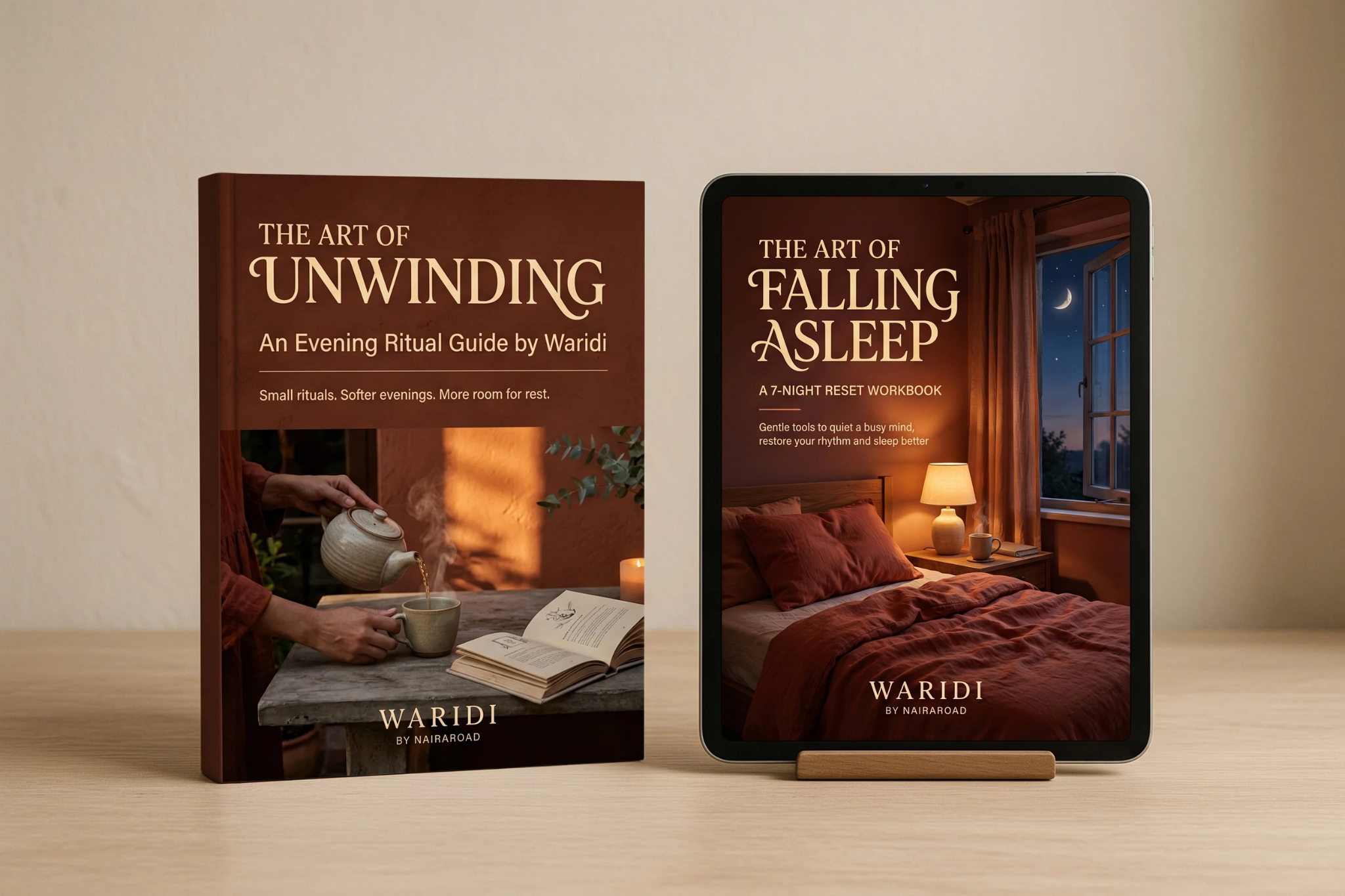
GET BOTH BOOKS FOR ₦6,900
Two practical guides. One simple step towards making more room for rest.
₦6,900
One-time payment.

A LITTLE ABOUT WARIDI
Waridi is a wellness venture by Nairaroad, created by Benahili Ojeme.
After years of creating practical digital resources to help people learn, work and grow, Benahili established Waridi to explore another important part of everyday life: rest.
The Waridi book bundle brings together two thoughtful, practical resources designed to help you create calmer evenings and approach sleep with more intention.
Waridi — Make room for rest.
FAQ.
CBT-I stands for cognitive behavioural therapy for insomnia. It's a structured, drug-free approach that works on the thoughts and habits that keep sleep difficulties going. The American College of Physicians recommends it as the first-line treatment for adults with chronic insomnia.
No. It draws on selected CBT-I techniques, such as the stimulus-control approach in the Bed Reset, in a short self-guided workbook. It is not a complete clinical programme and doesn't replace one.
No. Sleep restriction is a core CBT-I technique that is best done with professional guidance, so it isn't part of the workbook.
No, and be cautious of anyone who promises that. These are educational, self-guided resources, not a medical treatment. If your sleep difficulties are persistent, severe or affecting your daily life, speak with a healthcare professional.
No. The Art of Unwinding covers these honestly, and says plainly that you don't need essential oils or CBD to build a meaningful evening routine. The workbook needs only a pen and some paper.
No. Both are digital books in PDF format. Nothing is shipped. You can read them on your phone, tablet or computer.
After payment, you will be given access to download each book. they will also be sent to your provided email.
No. It's a single payment of ₦4,900 for both books. There are no recurring charges.
Both books include safety guidance. The workbook has a Check First page listing situations in which you should speak with a healthcare professional before using the exercises. Please read it before you begin.
Real People, Real Reviews
My inability to sleep affected my fitness journey
I knew I had to start taking my sleep seriously when I realized that my 10k steps and diet would be useless if I didn't get 7-8 hours of sleep every night. I started implementing the practices in these books and I'm now able to sleep through the night on most days. On days when I wake up in the middle of the night, I use the workbook and am able to fall back asleep. I'm happy to share these techniques with anyone who needs it.
Benahili Ojeme (Creator of both books)
Being a young entrepreneur means my thoughts keep me up at night
Grateful that Bena shared this with me. Sleep is very important and I'm grateful that I can attain it now without sleep aids.
etomi okene
I'm still an insomniac because I work late at night but...
I've been practising the some of the unwinding steps and it makes it easier to transition from work to sleep. would definitely recommend.
olayeni balogun
For Better Sleep & Rest
You don't have to force sleep. Start with one calmer evening and one tool for the night ahead.
Two books. One payment. ₦6,900.
2 digital books (PDF) · One-time payment · No subscription
What these books are, and what they aren't
We'd rather be clear than clever.
- Both books are educational, self-guided resources. They are not medical treatment, and they are not a cure for insomnia.
- The Art of Falling Asleep draws on selected CBT-I techniques. It is not a complete clinical CBT-I programme and doesn't replace one. Professionally delivered CBT-I remains the route for persistent or severe sleep difficulties.
- If your sleep difficulties are persistent, severe or affecting your daily life, speak with a healthcare professional. Both books say so too.
- Individual experiences vary.
The Art of Unwinding and The Art of Falling Asleep are educational, self-help resources created for lifestyle and informational purposes. They are not intended to diagnose, treat or cure insomnia or any other medical condition. The Art of Falling Asleep draws on selected techniques from cognitive behavioural therapy for insomnia (CBT-I) but is not a complete clinical CBT-I programme and does not replace medical advice, diagnosis or professionally delivered CBT-I. Always consult a qualified healthcare professional about persistent sleep difficulties, health conditions, pregnancy, or before starting supplements or herbal products. Individual experiences and outcomes vary.
© Waridi by Nairaroad. All rights reserved.